Let’s be honest. Turkey can either be the meal that makes everyone sigh in delight or the one people politely chew while reaching for more gravy. Every cook knows the secret is never just the butter or the temperature. The secret is in the herbs. Those little green leaves hold the magic that turns a simple turkey into something that fills the whole house with aroma and comfort.
When I cook turkey, I’m not just roasting meat. I’m inviting herbs to dance together. I touch them, smell them, and think about who will be sitting at that table. Cooking with herbs is not just a kitchen task. It is a small ritual filled with care and memory.
Have you ever noticed how one turkey smells like home while another just smells like food? That difference is the herbs speaking. They wake up the senses. They whisper warmth into the meal.
The Magic of Herbs in Cooking
There’s something sacred about herbs in a kitchen. They do more than flavor food. They breathe life into it. When you crush thyme or strip rosemary leaves from their stems, you feel that burst of scent that fills the air. It is impossible not to feel calm in that moment.
Turkey is a beautiful meat, but it can feel heavy without something to lift it. That is what herbs do. They balance and brighten. A few sprigs of thyme or a sprinkle of sage can change everything. It is amazing how a handful of green leaves can hold so much soul.
There is also something satisfying about using herbs that are fresh. Fresh herbs carry energy from the sun and soil. They carry time and patience. That is why your grandmother’s turkey always tasted better. She didn’t follow a perfect recipe. She cooked with love and herbs that carried stories.
The Essential Herbs for Turkey
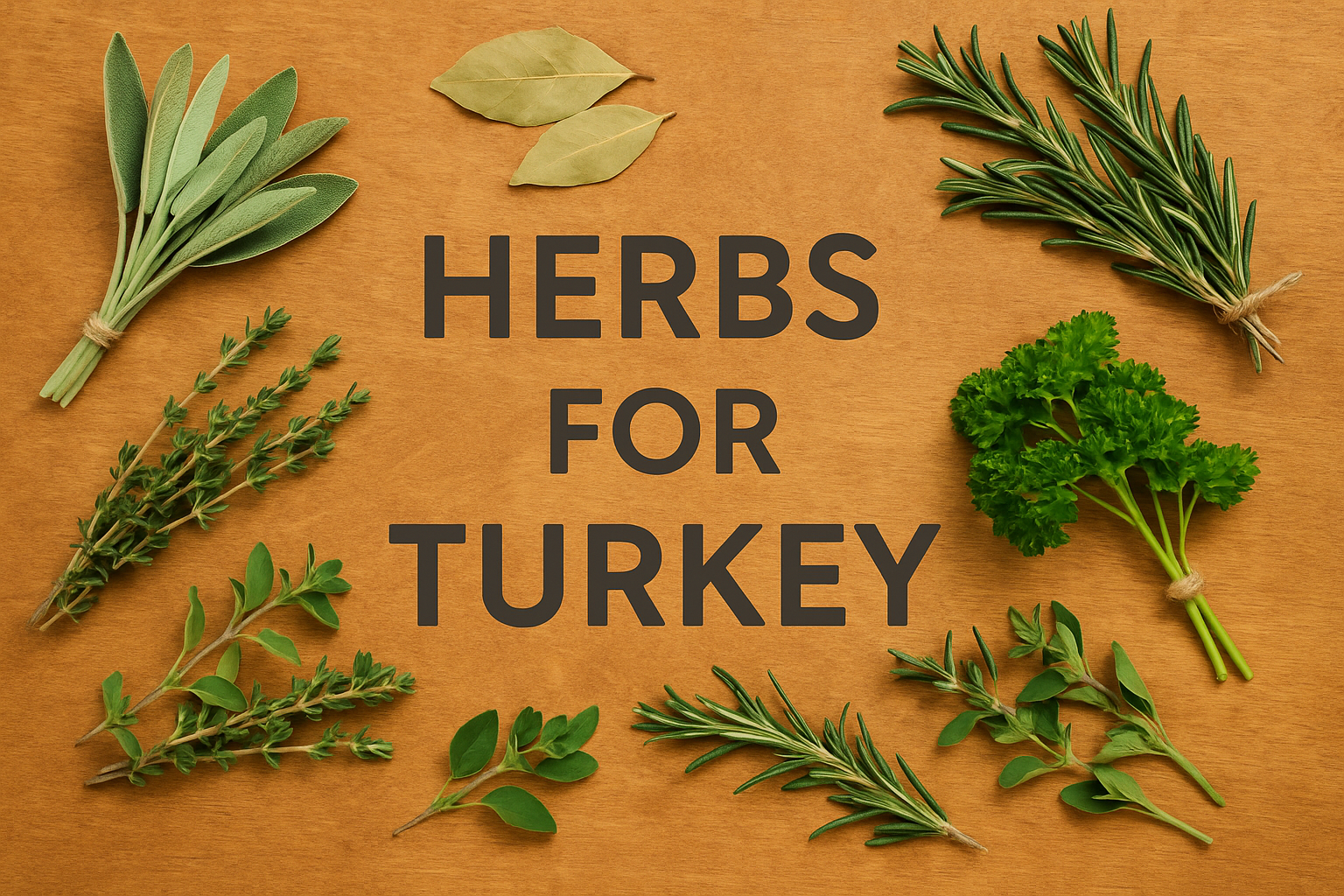
If I had to choose my favorite herbs for turkey, these would be the ones I would always reach for. Each has its own spirit and brings its own kind of comfort.
Sage
Sage feels ancient. It smells warm and grounding. It has that deep, earthy flavor that seems to hold the memory of wood and fire. When you add sage to turkey, it instantly becomes homey. It balances the richness of the meat beautifully. I love rubbing it under the skin or folding it into stuffing.
Thyme
Thyme is gentle but steady. It gives a soft brightness that blends into everything. It never shouts, but it always makes its presence known. When I roast turkey, I mix thyme with a little butter and let it melt through every bite. That aroma that fills the kitchen, that is thyme doing its quiet work.
Rosemary
Rosemary is bold and unforgettable. It has a forest scent that feels alive. A little bit goes a long way. I like tucking whole sprigs inside the turkey cavity or laying them on top before roasting. As the heat builds, rosemary releases its oils and perfumes the air in the most comforting way.
Parsley
Parsley is often overlooked, but it’s one of those herbs that brings everything together. It adds freshness and color, balancing out the deeper, heavier herbs. I love using it in compound butter or sprinkling it on top once the turkey is carved. That tiny touch of green gives life to the whole plate.
Oregano
Oregano adds warmth with a slight tang. It reminds me of Mediterranean kitchens where food smells of earth and sunlight. It pairs beautifully with thyme and rosemary, especially for grilled or smoked turkey. It gives the bird a flavor that lingers just enough to make you curious for the next bite.
Marjoram
Marjoram is soft and floral. It is like a quiet cousin to oregano but with a sweeter touch. It works well when you want something subtle. I love adding marjoram to gravies or gentle rubs. It adds elegance without trying too hard.
Bay Leaves
Bay leaves are quiet workers. You might not see them when the turkey is done, but you’ll taste their steady influence. Add them to the roasting pan or the stock you use for basting. They add a depth that you can’t quite describe, but you would miss if it weren’t there.
The Perfect Herb Blends for Turkey
Every turkey tells a different story depending on the herbs you use. I’ve spent years experimenting, and these blends never fail me.
The classic roast blend has sage, thyme, rosemary, and parsley. It gives that traditional, warm aroma that makes people smile the moment they walk in.
The rustic country blend uses oregano, marjoram, bay leaves, and a hint of garlic powder. It’s rich and hearty and feels like something that belongs in a countryside kitchen.
The citrus herb blend is made with thyme, parsley, lemon zest, and olive oil. It gives the turkey a bright, fresh flavor that’s perfect for anyone who loves a lighter, more modern taste.
And then there’s my favorite smoky butter blend. Rosemary, smoked paprika, sage, and butter. This one creates that deep roasted scent that fills every corner of the house.
Each blend has its own soul. Some are comforting, some are bold, some are playful. Try them all, or make your own. Herbs love to be mixed and matched. They enjoy the company.
How to Use Herbs for the Best Results
Knowing which herbs to use is only half the story. The real magic comes in how you use them.
Rubbing herb butter under the turkey skin is one of my oldest and most trusted tricks. The butter keeps the meat moist, and the herbs slowly release their oils as they cook. When you slice the turkey later, each piece tastes rich and fragrant.
Stuffing fresh herbs inside the turkey works beautifully too. As the bird roasts, the herbs release steam from within, flavoring every layer of meat. It’s like an herbal sauna inside your turkey.
You can also marinate your turkey in an herbal brine overnight. Add fresh thyme, rosemary, garlic, lemon, and a little salt. The meat soaks up everything while staying tender and juicy. When it roasts, the flavor runs deep.
And don’t forget your gravy. That’s where all the good things end up. Add a few fresh herbs to the pan drippings and let them simmer. The result is a sauce that tastes like the entire cooking process captured in one spoonful.
Fresh or Dried: Which Is Better
The choice between fresh and dried herbs depends on the feeling you want from your food.
Fresh herbs bring brightness and life. They pop with color and aroma. Dried herbs give a deeper, earthier flavor that sits quietly in the background.
I love using a mix of both. Dried herbs for the rub, fresh herbs for the finish. The combination gives your turkey layers of taste that unfold with each bite.
If you’re measuring, remember this little rule. One tablespoon of fresh herbs equals about one teaspoon of dried.
My Favorite Herbal Butter for Turkey
This one has never failed me. It’s simple, fragrant, and turns an ordinary turkey into something unforgettable.
Take soft butter, add finely chopped sage, thyme, and rosemary. Mix in a little garlic, lemon zest, and salt. Mash it all together until the butter turns speckled with green and smells alive.
Let it chill for a while, then rub it generously under the skin and all over the turkey. As it roasts, the butter melts slowly, carrying the herbs into every fiber of the meat. The skin turns golden, the aroma fills the kitchen, and the anticipation becomes almost too much to bear. This is one of those moments where you realize cooking can be magic.
The Herbalist’s Touch
Cooking with herbs is more than flavor. It’s energy. Sage grounds the spirit. Rosemary clears the mind. Thyme gives courage. Parsley refreshes. Marjoram soothes. Oregano warms. Every herb carries its own little story, its own quiet blessing.
That is why I always pause before cooking. I touch the herbs. I smell them. I thank them. Maybe that sounds silly to some, but when you cook with intention, the food carries that love. People can taste it even if they don’t know why it feels different.
When you use herbs in your turkey, you’re not just seasoning meat. You’re infusing it with care, patience, and spirit. You’re feeding more than the body. You’re feeding the heart.
Common Mistakes to Avoid
It’s easy to go too far with herbs, especially rosemary. A little bit of it can fill the room, but too much will take over everything else. Use moderation and balance.
Another mistake I see often is adding herbs too early. They can burn and lose their fragrance. Mix them with oil or butter to protect them from heat, or add them toward the middle of cooking.
Old herbs are another problem. Dried herbs lose their strength after a while. If they look faded or smell weak, it’s time to replace them. The difference between stale herbs and fresh ones is night and day.
And never forget the importance of acid. A squeeze of lemon juice or a dash of vinegar can bring your herbs and turkey to life. It sharpens the flavors and makes the herbs sing.
Every Home Deserves That Aroma
There’s nothing like the smell of a well-seasoned turkey roasting. It fills the whole house, wrapping everyone in comfort. You can almost taste it before it even leaves the oven.
Cooking turkey with herbs isn’t about perfection. It’s about care and attention. You don’t need fancy tools or exact measurements. Just your senses. Your hands. Your heart.
When you bring those herbs together, when you smell that warmth rising from the oven, you realize you’ve created something more than food. You’ve created a moment.
A Warm Final Thought
I still believe herbs carry memories. When I cook turkey, I remember the women in my family standing in the kitchen, each with their own handful of green leaves. I remember the laughter, the stories, and the smell of sage filling the air.
Herbs have that power. They connect the past to the present, the cook to the food, the table to the heart. Every time you season your turkey, you’re continuing that quiet tradition.
So the next time you prepare your turkey, take a moment to really smell the herbs. Feel them between your fingers. Let them remind you that food isn’t just about taste. It’s about love, memory, and warmth.
And when the meal is ready and everyone gathers around, can you feel the joy those herbs have brought to your home?