Herbs for ADHD in Adults vs. Kids
There are days when living with ADHD feels like trying to calm a thunderstorm with your hands. The energy, the racing thoughts, the sudden waves of distraction — it can leave both parents and adults searching for answers. If you’ve ever wondered whether there might be a gentler, more natural way to support focus and calm, you are not alone.
Many families are now exploring herbs as an alternative or companion to medication. But there is something important to understand before diving in. Not all herbs are created equal. What works well for an adult might be far too strong for a child, and what soothes a child may not do much for a busy adult juggling stress and deadlines. That’s why today, we’re exploring herbs for ADHD in adults and kids and how to use them safely and effectively.
Understanding ADHD from a Natural Perspective
ADHD isn’t a sign that something is broken. It’s a way the brain processes information differently. For some, it feels like constant motion, a mind that never sits still. For others, it shows up as fogginess, forgetfulness, or the endless feeling of being pulled in ten directions at once.
Children often express it through energy — bouncing, running, talking non-stop, and losing focus when something new appears. Adults, on the other hand, feel the same restlessness but often hide it behind multitasking, anxiety, or exhaustion. The brain is still busy; it’s just learnt how to hide it better.
From a natural medicine perspective, ADHD is viewed as an imbalance in the nervous system. The energy runs hot and fast. It’s like a string pulled too tightly — it hums loudly but loses its tune. Herbs can help bring that string back into harmony. Not by numbing or sedating, but by guiding the body to find its natural rhythm again.
How Herbs Can Help with ADHD
Herbs are not quick-fix solutions. They don’t flip a switch overnight. What they do is work gently, layer by layer, helping the nervous system find calm and balance.
Some herbs are adaptogens, meaning they help the body handle stress better. Others are nervines, which calm and nourish the nerves. A few are cerebral tonics, helping improve blood flow and focus in the brain.
Think of herbs as gentle teachers. They whisper to your body, showing it how to relax, focus, and restore itself naturally. Over time, this whisper becomes the new normal — a steady calm instead of chaos.
Herbs That Support Adults with ADHD

For adults, ADHD often blends with stress, fatigue, and a long list of responsibilities. The best herbs for adults help with both focus and emotional grounding.
Rhodiola rosea is a wonderful choice for adults who struggle with low energy and mental fog. It’s known for balancing the stress response and improving alertness without causing jitteriness. If you often hit a mid-day slump or lose motivation, Rhodiola might help you regain rhythm and drive.
Ginkgo biloba is one of the most studied herbs for cognitive health. It improves circulation to the brain, enhancing concentration and memory. Adults who feel scattered or forgetful often notice a subtle but steady improvement when using Ginkgo consistently.
Bacopa monnieri, also known as Brahmi, is a brain tonic from Ayurvedic tradition. It helps calm restlessness and supports better recall and focus. This herb takes time to build in the system but offers lasting clarity once it does.
If anxiety tends to mix with your ADHD symptoms, Ashwagandha is a beautiful ally. It eases tension, reduces fatigue, and supports a balanced mood. Think of it as a warm herbal blanket for your nervous system.
Gotu Kola is another gentle but powerful herb for adults. It helps sharpen concentration while keeping you calm. It doesn’t overstimulate, which makes it great for people who want focus without a crash later in the day.
Adults can even mix herbs to create balance. Gotu Kola in the morning with tea or a smoothie, and Ashwagandha at night before bed, often helps maintain calm focus through the day and restful sleep at night.
Herbs That Support Kids with ADHD
When it comes to children, the rule is simple: gentle is best. Their bodies are smaller, their systems are more sensitive, and their energy is still learning its boundaries. Herbs for kids should calm without dulling their natural brightness.
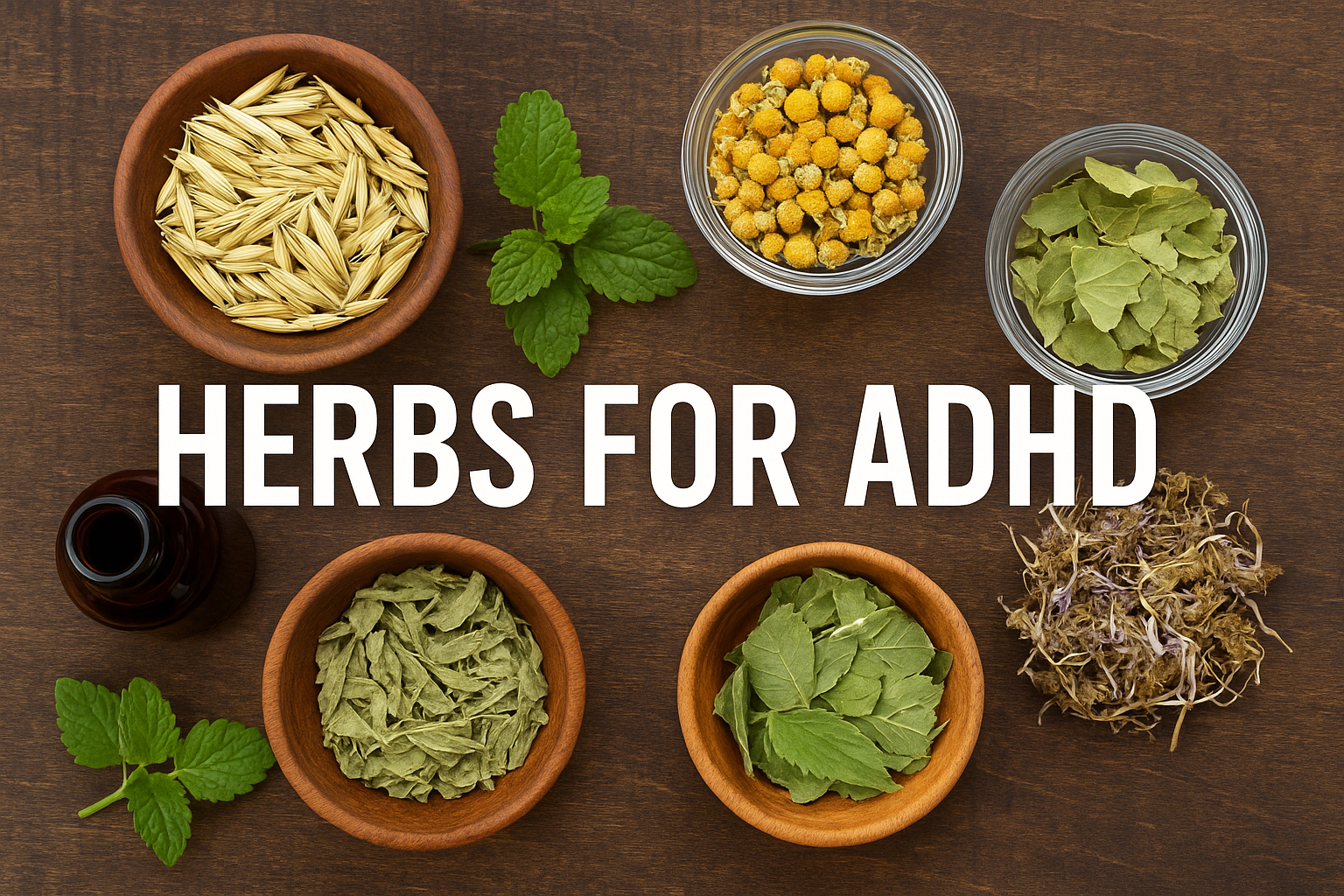
Chamomile is one of the safest and most familiar herbs for children. It relaxes the nervous system, helps with sleep, and eases emotional ups and downs. A small cup of chamomile tea before bed or study time can make a noticeable difference.
Lemon Balm has a soft lemony flavor and a calming, happy energy. It helps settle irritability and restlessness, especially for kids who get frustrated or moody when tired. It can be made into tea, syrup, or glycerite for younger ones.
Passionflower is a beautiful herb for kids who find it hard to sit still or unwind after a long day. It doesn’t sedate but gently slows the mind so focus becomes easier. It’s perfect before bedtime or during high-energy days.
Oat Straw, also known as Avena sativa, is another favorite. It nourishes the nervous system over time, like food for frazzled nerves. It supports calm energy and steady focus without making children drowsy.
Gotu Kola and Bacopa can be used in tiny amounts for older children, but should be guided by an experienced herbalist. They can support attention span and learning when used carefully. Always remember, with children, start small. Watch how they respond. Herbs are gentle but powerful when used with patience.
Comparing Adult and Kid Herbal Needs
Adults and kids may share the same diagnosis, but their bodies speak very different herbal languages. Adults usually need herbs that balance both stimulation and grounding. They’re managing work, stress, and constant mental strain. Kids, meanwhile, need herbs that calm and nourish while allowing natural playfulness to shine through.
Adults tend to respond well to stronger adaptogens like Rhodiola or Ashwagandha. Kids thrive on softer nervines like Chamomile, Lemon Balm, or Oat Straw. Adults might take tinctures or capsules for convenience. Kids usually prefer sweet herbal glycerites, gentle teas, or syrups.
Adults often need herbs daily to keep focus and productivity steady. Children benefit most from herbs during transitions — before school, bedtime, or when emotions run high.
It’s not only about what herb you use but why you use it. Adults reach for herbs to keep pace. Kids use them to slow down enough to listen, learn, and feel secure.
Blending Herbs with Lifestyle and Diet
Herbs work best when they’re part of a bigger rhythm. ADHD support doesn’t end with a cup of tea — it includes what we eat, how we rest, and the space we create for stillness.
Diet makes a huge difference. Cutting back on processed sugar, artificial colors, and preservatives can reduce hyperactivity in many kids and adults. Foods rich in omega-3 fatty acids, like fish, walnuts, and flax seeds, help nourish the brain and support focus.
Sleep is another major piece. Without good rest, even the best herbs will struggle to do their work. Try creating a calm evening ritual. For children, this could be a story and a cup of chamomile tea. For adults, maybe a moment of quiet, a warm ashwagandha drink, or a short breathing exercise.
Movement matters too. ADHD energy needs to move. Walking, dancing, stretching, or spending time outdoors can be as healing as any herb. When we move the body, we help the mind organize itself. Herbs simply enhance what movement already begins.
A Note on Safety
This is where many people go wrong — assuming natural means harmless. Herbs are powerful and deserve respect. Always consult a qualified herbalist or healthcare provider before starting herbs, especially for children or if you or your child is taking prescription medication.
Start with small doses and observe. Each body responds differently. Some herbs take time to show their full effect. Consistency and patience bring the best results.
Quality is essential. Choose organic, responsibly sourced herbs. Avoid cheap powders and low-quality tinctures from unknown brands. What you put into your body should be as pure as your intention for healing. Herbs are not replacements for medical treatment but companions to it. They support the body as it learns balance again.
Simple Herbal Blends for Daily Use
For adults, a morning Focus Tea can be uplifting and clear:
1 part Ginkgo biloba
1 part Gotu Kola
A pinch of Green Tea for gentle stimulation
Drink this before work or study to stay centered.
At night, unwind with a Calm Tonic:
1 part Ashwagandha
1 part Passionflower
1 part Lemon Balm
This blend helps melt tension and prepare your body for restful sleep.
For kids, a Bedtime Tea can create a soothing routine:
1 part Chamomile
1 part Lemon Balm
A touch of Oat Straw
Add honey if the child is old enough and make it part of their nightly wind-down. You don’t need to follow recipes perfectly. Let your intuition guide you. Each person is unique, and herbs love to adapt to that uniqueness.
Final Thoughts from an Herbalist
If there’s one thing I’ve learned over the years, it’s that ADHD doesn’t make anyone broken. It simply means the brain dances to a different rhythm. Herbs don’t try to change that rhythm. They help the body listen more clearly to its own beat.
Whether you’re an adult trying to stay focused or a parent guiding a child through the noise, know this — herbs can offer calm, clarity, and gentle direction. They work quietly, patiently, and always in partnership with you.
Give them time. Sip your tea slowly. Trust the process. The storm inside isn’t something to silence; it’s something to understand. And maybe, as you listen to the body’s whispers and the earth’s quiet medicine, you’ll start to wonder – what if balance has been waiting for you all along?