Menopause can arrive quietly for some women and suddenly for others. One morning, you wake up and realize your body feels different. You find yourself sweating through the night, tossing and turning, wondering when you last had a full night of rest.
You try to laugh it off, but inside, it feels like something is shifting. The mood swings, the sudden heat, the forgetfulness all of it can make you feel like a stranger in your own body. It can even make you question your strength.
But here is what I tell every woman who walks into my practice. Your body is not betraying you. It is transforming. In Traditional Chinese Medicine, this time of life is not viewed as loss but as renewal. It is an invitation to restore balance in a deeper, wiser way.
Now let us talk about how certain Chinese herbs can help you find that balance again.
Understanding Menopause the Chinese Medicine Way
In Chinese Medicine, everything in the body depends on the harmony between Yin and Yang. Yin represents coolness, nourishment, rest, and moisture. Yang represents warmth, activity, and movement.
As women move through menopause, Yin energy begins to decline naturally. When Yin becomes weaker, Yang rises unchecked, creating too much inner heat. That is why the body produces hot flashes, dryness, and restless nights.
The purpose of TCM is not to fight the body but to listen to it. The herbs used in Chinese medicine help restore that lost Yin and calm the rising fire. They support the organs that guide balance, helping you move through this stage with more comfort and grace.
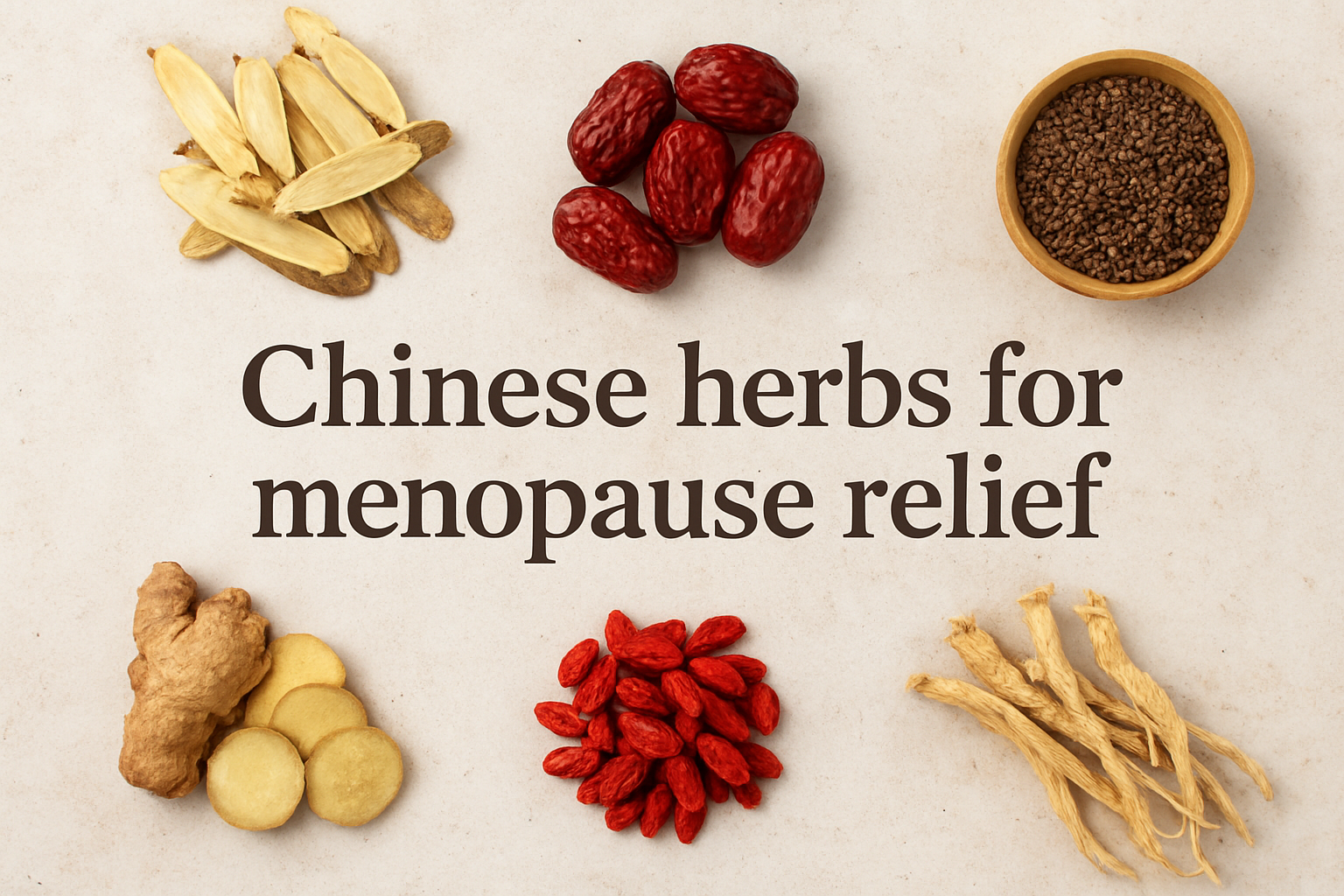
Below are seven herbs that have been trusted for centuries to help women through menopause.
1. Dong Quai (Angelica sinensis) The Female Ginseng
Dong Quai has long been known as the queen of women’s herbs. It nourishes the blood, supports circulation, and helps regulate the natural rhythm of hormones.
When your blood is strong and moving freely, your body cools more efficiently. That means the heat eases, the chills calm down, and your mood finds its balance again.
Dong Quai also supports energy and vitality. If you feel drained or pale, this herb gently brings warmth and strength back to the system. It reminds your body that its vitality has not disappeared; it only needs a little encouragement to return.
2. Rehmannia (Shu Di Huang) The Yin Restorer
Rehmannia is a deep and nourishing herb that cools the inner fire caused by Yin deficiency. It is often chosen for women who experience night sweats, dryness, and restlessness.
This root is known to replenish the reserves that life has slowly worn down. Many women notice that their sleep becomes steadier and their body feels calmer after using it consistently.
Rehmannia is often part of classic herbal formulas such as Liu Wei Di Huang Wan, which strengthens the kidneys and restores hormonal balance. Once Yin is restored, the body begins to feel grounded again.
3. Licorice Root (Gan Cao) The Harmonizer
Licorice Root may seem simple, but it plays an important role in many herbal blends. It helps the other herbs work together smoothly while soothing stress and irritability on its own.
It supports the adrenals, balances energy, and can lightly mimic natural estrogen activity in the body. For women who feel anxious or easily overwhelmed, Licorice Root helps soften those sharp edges.
It is also gentle on digestion and supports the body in absorbing nutrients. When everything in the body works in harmony, emotional balance becomes easier to maintain.
4. Chinese Wild Yam (Shan Yao): The Gentle Balancer
Chinese Wild Yam is one of those herbs that work quietly but powerfully over time. It supports both the kidneys and the spleen, two organs that are central to hormonal balance and energy in TCM.
It is known for easing dryness, improving stamina, and supporting smooth digestion. Women who feel drained, dizzy, or unsteady often benefit from it.
Chinese Wild Yam also contains natural plant compounds that help the body maintain hormonal balance without synthetic hormones. Over time, it helps your system remember how to find its own natural rhythm again.
5. Schisandra Berry (Wu Wei Zi): The Calming Strength
Schisandra is a small berry with remarkable power. It is called the five-flavor fruit because it contains all five tastes, meaning it works with nearly every organ system in the body.
For women who cannot sleep well or feel emotionally scattered, this berry offers calm and resilience. It nourishes the liver, helps the body hold fluids, and cools the heat that leads to night sweats.
Schisandra is also an adaptogen, a plant that helps the body respond better to stress. It does not push you to feel energized or tired; instead, it helps you adapt and stay steady no matter what the day brings.
6. Peony Root (Bai Shao): The Emotional Soother
When moods swing sharply or frustration builds up without warning, peony root can bring relief. It soothes the liver Qi, which in TCM is often linked to emotional flow and tension.
By calming that energy, peony root helps reduce irritability and tension. It also eases muscle tightness and abdominal discomfort that can accompany hormonal shifts.
This root is often paired with Licorice Root in a traditional blend known as Shao Yao Gan Cao Tang. Together, they calm both the physical body and the emotional heart, making it easier to feel centered again.
7. Ginseng (Ren Shen): The Reviver of Energy and Spirit
Ginseng is one of the most respected herbs in the world of Chinese medicine. It strengthens Qi, the vital life energy that fuels all body functions.
When fatigue feels overwhelming or the spark of motivation fades, Ginseng can help rebuild strength from within. It brings back focus, vitality, and sometimes even libido, which many women find begins to wane during menopause.
Ginseng does not work like caffeine or quick stimulants. It rebuilds your reserves, bringing your natural energy back gradually but powerfully. It helps you meet the day with more confidence and calm.
Using These Herbs Safely and Effectively
Each woman’s body tells a different story. The symptoms of menopause may be shared, but the underlying patterns are unique. That is why it is best to work with a trained herbalist or TCM practitioner who can choose the right blend for your individual needs.
They will take time to listen and to study your pulse, your tongue, and your energy before creating a personalized plan. Herbs are rarely used alone in TCM. Instead, they are combined to create harmony and balance that matches your body’s own rhythm.
If you prefer to start gently, try herbal teas or tinctures. Allow your body to adjust and notice how you feel over time. True healing through herbs takes patience, but the results are deeper and longer-lasting.
Supporting Herbal Healing with Daily Habits
Herbs do their best work when the rest of your lifestyle supports them. Think of your meals, your rest, and your mindset as part of your treatment.
Choose nourishing foods that build Yin, such as tofu, sesame seeds, walnuts, black beans, and juicy fruits like pears and apples. Drink room-temperature water and avoid iced drinks that slow your system.
Give yourself moments of stillness. Gentle movement, such as Tai Chi, slow walking, or stretching, can help your Qi flow freely. When energy moves, symptoms soften. When you rest deeply, your Yin replenishes.
Try to sleep before midnight. The hours before midnight are when your body repairs and restores Yin energy most efficiently. Each night you go to bed early is like making a small deposit into your energy bank.
What Healing Through Herbs Really Feels Like
Healing through Chinese herbs is not dramatic. It is gradual. The first signs of progress might be small but meaningful. Maybe you sleep an hour longer without waking drenched in sweat. Maybe your mood lifts a little more easily. Maybe you find yourself smiling again without forcing it.
These moments matter. They are signs that your body is listening and responding. TCM healing does not suppress symptoms. It rebuilds strength from the inside, layer by layer, until balance becomes your natural state again.
Consistency is key. Give the herbs time to do their quiet work. The results will come, not with sudden change, but with steady renewal.
The Wisdom Behind These Remedies
Every one of these herbs carries hundreds of years of wisdom. Women before us have trusted them through every stage of life. They remind us that healing does not have to come from something synthetic or rushed.
Nature offers what we need when we are willing to listen. The herbs teach patience, and patience brings transformation. They are not here to fight your body but to guide it back into balance.
True healing is not about silencing your symptoms. It is about understanding what they are trying to say.
Embracing Menopause as a Time of Renewal
Menopause can feel like an ending, but it is really the beginning of a new chapter. The cycles may stop, but your body’s wisdom continues to grow. This is a time to care for yourself more deeply than ever before.
Chinese medicine views menopause as a time to nourish Yin, slow down, and cultivate peace. The strength you build now carries you into the next stage of life with grace and vitality.
You have spent decades nurturing others. Now your body is asking you to nurture yourself. To rest. To soften. To allow healing to happen naturally.
So what if this stage of life is not about losing something at all but about rediscovering who you truly are underneath all the noise?